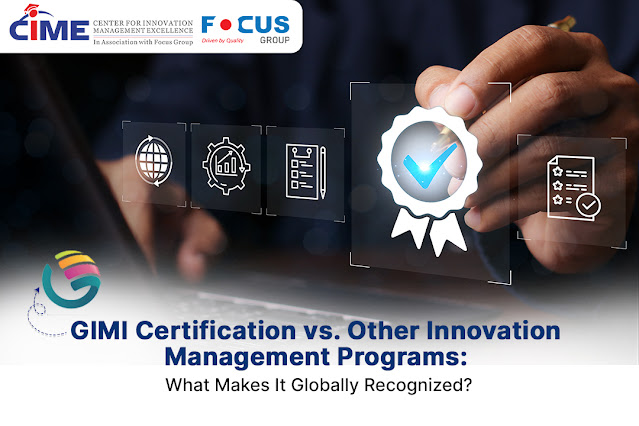
GIMI Certification vs. Other Innovation Management Programs: What Makes It Globally Recognized?
Innovation is no longer optional—it’s a strategic necessity for organizations that want to stay relevant. With rapid technological evolution and shifting market demands, companies now prioritize trained professionals who can implement structured innovation frameworks. This is where GIMI Certification stands out as one of the most trusted and globally recognized certifications for innovation leaders.
What Is GIMI Certification?
The Global Innovation Management Institute (GIMI) is an international standards body dedicated to setting professional benchmarks for innovation practices. GIMI Certification empowers professionals with the ability to design, manage, and scale innovation systems within organizations. It follows a competency-based model, making it ideal for individuals seeking measurable, practical innovation expertise.
How GIMI Differs from Other Innovation Management Programs
1. A Standardized Global Framework
Many Innovation Management Programs offer theoretical concepts but lack a unified global system.
GIMI, however, uses a standardized innovation framework recognized across 50+ countries, giving certified professionals international credibility.
2. Practice-Oriented, Not Just Theory
Other programs often rely heavily on academic models.
GIMI focuses on:
- Real-world case studies
- Hands-on tools
- Innovation challenges
- Practical frameworks that can be applied instantly at work
This makes GIMI Certification more actionable and industry-ready.

3. Competency-Based Learning Levels
GIMI offers a structured system with multiple certification levels—from Associate to Master Innovator.
This competency path ensures continuous professional growth, making it more robust than single-level programs.
4. Recognition Among Global Corporates
Thousands of companies—Fortune 500 organizations, government agencies, and innovation-driven enterprises—accept and prefer GIMI Certification due to its credibility.
This global adoption gives learners a strong competitive advantage compared to many less-known programs.
5. Focus on Systematic Innovation
While other programs may teach creativity tools, GIMI goes deeper into building complete innovation systems, covering:
- Opportunity identification
- Idea management
- Innovation portfolios
- Implementation roadmaps
This ensures long-term organisational transformation rather than isolated innovation activities.
1. Why GIMI Is a Top Globally Recognized Certification
GIMI’s credibility comes from:
- Its alignment with global industry practices.
- Standardized curriculum accepted worldwide
- Strong community of certified innovators
- Constant updates to match emerging trends
Professionals holding GIMI Certification are viewed as specialists capable of driving measurable business outcomes, making it a preferred choice among globally recognized certifications for innovation management.

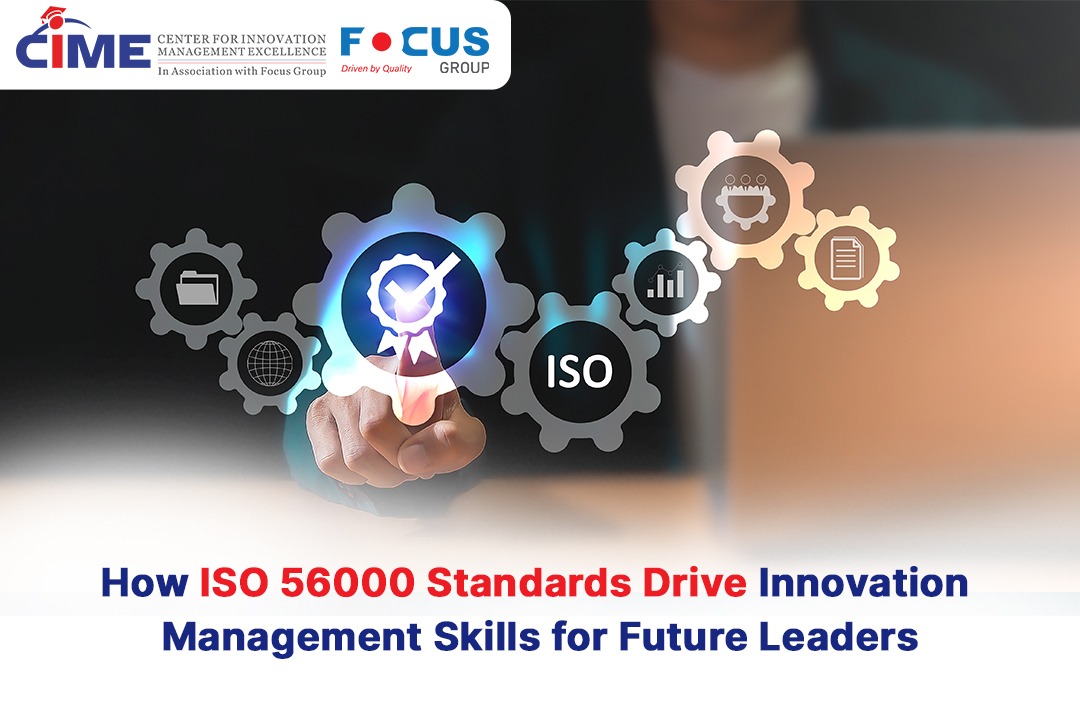
2. How ISO 56000 Standards Drive Innovation Management Skills for Future Leaders
In today’s dynamic business ecosystem, the organizations that thrive are the ones that innovate consistently. To support structured innovation and reduce uncertainty, global leaders are now turning to the ISO 56000 family of standards. These standards create a solid foundation for developing strong Innovation Management Skills and guiding teams toward Innovation Excellence.
Understanding ISO 56000: A Framework for Innovation Success
ISO 56000 is an internationally recognized standard that introduces a common language, principles, and guidelines for innovation management. Instead of treating innovation as random creativity, ISO 56000 turns it into a strategic, systematic, and measurable process.
This standard helps organizations transform innovation from an experiment into a disciplined capability.
How ISO 56000 Builds Innovation Management Skills for Future Leaders
1. Encourages Strategic Thinking
ISO 56000 trains leaders to view innovation not as a trend but as a strategic tool.
It helps them:
- Identify opportunities
- Align innovation goals with business objectives
- Create long-term innovation roadmaps
- This strategic orientation is vital for future-ready leadership.
2. Strengthens Problem-Solving and Decision-Making
The standards guide leaders to use structured thinking tools, enabling them to:
- Analyze challenges
- Evaluate risks
- Find sustainable solutions
This strengthens core Innovation Management Skills needed to navigate complex markets.
3. Promotes a Culture of Innovation Excellence
ISO 56000 places strong emphasis on culture—encouraging leaders to create environments where:
- Ideas flow freely
- Failure is seen as learning
- Collaboration is encouraged
- Innovation is everyone’s responsibility
This mindset shift leads to Innovation Excellence that lasts.
4. Enhances Capability Through Process Discipline
Future leaders need to manage innovation with efficiency and consistency.
ISO 56000 provides frameworks for:
- Idea management
- Knowledge sharing
- Evaluation methods
- Portfolio management
This process-based approach turns leaders into innovation architects rather than random idea generators.
5. Encourages Continuous Improvement
One of the strongest elements of ISO standards is the commitment to improvement.
Leaders implementing ISO 56000 constantly refine and upgrade their innovation practices, making them adaptable and future-ready.
Why ISO 56000 Matters for Future Leaders
The future belongs to leaders who can manage innovation proactively. ISO 56000 provides:
- Clear processes
- Standardized guidelines
- Universal frameworks
- Enhanced leadership capabilities
With the right approach, ISO 56000 helps individuals and organizations achieve Innovation Excellence and develop strong Innovation Management Skills that shape a sustainable, competitive future.
Contact us: +91 9589706358 | Visit: www.cimepro.in